Gas Line Repair & Inspection in Rego Park, Queens
Natural gas powers stoves, boilers, and water heaters throughout Rego Park. Maintaining gas line safety, verifying threaded black iron joints, and conducting code-mandated inspections protects residents and preserves building compliance.
If you smell natural gas (distinct rotten-egg odor), hear hissing gas piping, or suspect an active gas leak, evacuate the building immediately. Do not operate light switches, do not use elevators or phones indoors, and do not create any open flames. Call 911 and your gas utility (National Grid: 1-718-643-4050 or Con Edison) immediately from a safe outdoor location. Never attempt DIY gas repairs.
Ensuring Gas Line Safety in Rego Park Properties
When dealing with gas line repair Rego Park Queens safety and regulatory compliance take absolute precedence. In Rego Park apartment buildings and co-ops along 63rd Drive, Queens Boulevard, and Saunders Street, natural gas distribution networks involve extensive threaded black iron piping connecting basement meter banks to individual residential units and central boilers.
Over decades, building vibration, mechanical impact, and joint compound dry-out can cause micro-leaks at pipe unions and shutoff valves. Performing a routine gas piping inspection Rego Park Queens or planning a dedicated gas line installation for stove Rego Park Queens requires specialized pressure testing and licensed master plumber oversight.
Our qualified technicians perform thorough pressure drop tests, electronic combustible gas sniffer surveys, and full manifold inspections. We communicate clearly with building superintendents, property owners, and utility dispatchers to ensure every gas system operates securely.
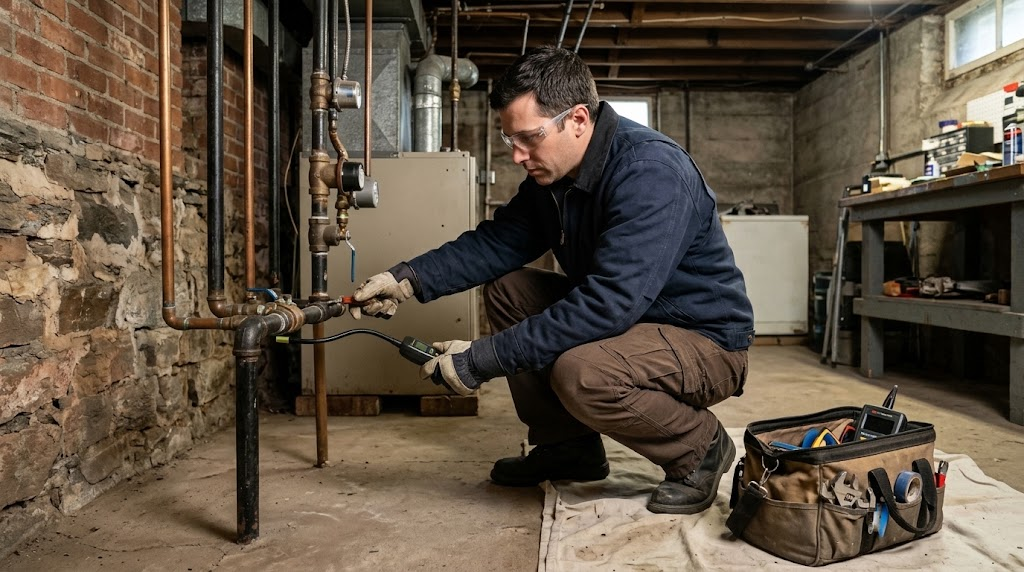
Verifying threaded black iron piping, meter manifold headers, and appliance shutoff cocks across Rego Park.
Understanding NYC Local Law 152 Compliance
Under New York City Local Law 152 of 2016 (LL152), periodic inspection of exposed gas piping systems is required once every four years for covered buildings. The law applies broadly across multi-family properties, commercial facilities, and residential buildings classified under the NYC Building Code.
Importantly, buildings in occupancy group R-3 (such as certain one- and two-family private homes) are generally exempt from mandatory LL152 filings unless used for specific non-residential purposes. Property owners must confirm their specific building classification and community district cycle directly with the NYC Department of Buildings (DOB).
During an official LL152 inspection, an NYC Licensed Master Plumber (LMP) examines all exposed gas piping from the point of entry into the building through public hallways, corridors, and boiler rooms up to individual residential meter headers, testing for combustible gas concentrations, illegal alterations, and corrosion.
Appliance Connections & Stove Hookups
Installing a new gas range, dryer, or commercial cooktop involves more than attaching a flexible hose:
- Dedicated Shutoff Cock: Every appliance requires an accessible, commercial-grade ball valve within 6 feet.
- Approved Connectors: Utilizing corrugated stainless steel connectors (CSST) rated for appliance BTU demands.
- Leak Sniffer Test: Testing every threaded joint under active line pressure before appliance firing.
The Gas Piping Inspection & Repair Workflow
Gas line work follows strict New York City Fuel Gas Code procedures to guarantee life-safety:
Electronic Sniffing
Calibrated combustible gas detectors scan meter manifolds, pipe threads, unions, and regulator vents down to parts-per-million levels.
System Isolation
The affected gas branch is closed via master valves, and lines are vented safely to prepare for physical pipe repairs.
Threaded Pipe Work
Damaged pipe lengths or corroded nipples are replaced using heavy black malleable iron with approved gas-rated pipe dope.
Pressure Testing
Lines are pressurized with air or inert nitrogen under a certified test gauge to confirm zero pressure loss before utility turn-on.
Connected Gas & Heating Solutions
Gas piping connects directly to central boilers, water heaters, and domestic plumbing across Rego Park:
Boiler Repair
Ensuring fuel trains, gas pressure regulators, and burner solenoid valves operate efficiently on central heating boilers.
Boiler Repair DetailsWater Heater Repair
Troubleshooting gas water heater pilots, thermocouples, and dedicated gas supply lines providing constant hot water.
Water Heater HelpLeak Detection Services
Comprehensive diagnostic testing to differentiate between domestic water leaks, steam leaks, and pressurized utility lines.
Explore Leak DetectionFrequently Asked Questions About Gas Lines
Critical safety guidance, NYC DOB rules, and technical answers for Rego Park property owners.
If you smell natural gas (rotten eggs) or suspect a leak, evacuate all occupants from the building immediately. Do not operate light switches, do not use phones indoors, do not ring doorbells, and do not create any open flame. Once outside at a safe distance, call 911 and your gas utility (National Grid at 1-718-643-4050 or Con Edison) immediately.
NYC Local Law 152 mandates periodic gas piping inspections once every four years for covered buildings, performed by or under the direct supervision of an NYC Licensed Master Plumber. Certain one- and two-family residential buildings are generally exempt unless used for commercial or institutional occupancy. Property owners should verify their specific community district schedule with the NYC Department of Buildings.
After black iron gas piping is assembled or repaired, technicians close all appliance isolation cocks and pressurize the piping system with air or nitrogen to a code-specified testing pressure (typically 3 PSI for standard low-pressure systems) on a calibrated digital or mercury gauge, verifying zero pressure drop over the required inspection period.
No. Under the NYC Fuel Gas Code and Department of Buildings regulations, all gas piping modifications, appliance connections, and shutoff valve installations must be performed by or under the direct supervision of an NYC Licensed Master Plumber with required utility filings.
Need Gas Line Testing or Stove Installation in Rego Park?
Ensure your building meets NYC Department of Buildings standards. Talk directly with a plumbing professional today.
Call (315) 202-8009